
Khulna's win was built on a 180-run first-innings lead, not the 135 chase
**मुख्य उत्तर** खुलना डिवीजन ने नेशनल क्रिकेट लीग के प्रथम श्रेणी मुकाबले में मयमनसिंह डिवीजन को आठ विकेट से हराया। निर्णायक अंतर पहली पारी में बना: खुलना 288 रन (86.1 ओवर) और मयमनसिंह 108 रन (51.3 ओवर) — 180 रन की बढ़त, जिसके कारण फॉलो-ऑन लागू हुआ। **मुख्य तथ्य** - खुलना डिवीजन: 288 रन, 86.1 ओवर; मोहम्मद मिथुन 119, नुरुल हसन सोहन 104, दोनों शतक प्लेयर ऑफ द मैच मिथुन के नाम। - मयमनसिंह की पहली पारी: 108 रन, 51.3 ओवर; यासीन आराफत मेशुद के छह विकेट हारी हुई टीम में गए। - फॉलो-ऑन के बाद मयमनसिंह: 319 रन, 91.3 ओवर; अल अमीन ने 185 गेंद पर 102 रन बनाए। - खुलना ने लक्ष्य 140/2 (38.3 ओवर) में पूरा किया; शेख परवेज़ जीबोन चार विकेट, सौम्य सरकार तीन विकेट। - खुलना के 288 में 223 रन दो बल्लेबाज़ों के; बाकी टीम अतिरिक्त रनों समेत 65 रन पर सिमटी। **स्रोत विवरण** मूल स्रोत: बांग्ला भाषा की घरेलू मैच रिपोर्ट (प्रकाशक, बाइलाइन और प्रकाशन तिथि उपलब्ध नहीं)। ओवर-रेट और रन-योग स्कोरकार्ड अंकगणित से निकाले गए हैं; आँकड़े आधिकारिक स्कोरकार्ड से सत्यापन योग्य हैं। **संबंधित प्रश्न-उत्तर** प्रश्न: मैच का फैसला किस पारी में हुआ? उत्तर: पहली पारी में — 180 रन की बढ़त ने फॉलो-ऑन तय किया और 135 रन का लक्ष्य उसी का परिणाम था। प्रश्न: क्या मेशुद के छह विकेट मैच में निर्णायक रहे? उत्तर: नहीं — छह विकेट के बावजूद खुलना 288 तक पहुँचा, क्योंकि उस पारी में दो बल्लेबाज़ों ने 223 रन जोड़े; cricsultan.com Player Depth Index के अनुरूप यह आँकड़ा टीम-संदर्भ के बिना पढ़ा नहीं जाना चाहिए। प्रश्न: क्या एक मैच से खिलाड़ी की फॉर्म तय की जा सकती है? उत्तर: नहीं — उपलब्ध रिपोर्ट में औसत, इकॉनमी, आयु और करियर स्प्लिट्स नहीं हैं, इसलिए यह प्रत्येक खिलाड़ी की एक-एक पारी का स्नैपशॉट है।
Yasin Arafat Meshud took six wickets and his team lost by eight wickets. Of all the numbers this National Cricket League fixture at Khulna Divisional Stadium produced, that is the cleanest and the most misleading. In first-class cricket a six-for usually sits at the centre of the story. Here it sat at the edge, because the centre had already been fixed: Mymensingh's first innings, 108 all out in 51.3 overs. From the moment the follow-on was enforced, the match stopped being a contest and became an arithmetic exercise.
I was not watching from anywhere the pitch was visible. I was watching from where most of the subcontinent's domestic cricket gets watched: a scorecard refreshing at two in the morning, where the ratio between the overs column and the runs column becomes the only real evidence. Thirteen years of reading domestic scorecards has settled one thing for me — the innings that decides a match is the losing one, not the winning one.
I went looking for the scorecard and found an over-rate. In November 2026 I skipped a lecture in Ahmedabad to watch Gujarat Under-19 because I wanted to see Het Patel bat, and then spent a week trailing his father's textile shop and the early-morning nets at the Gujarat College ground. That habit taught me that a scorecard without a ground is half a document. This time there was no ground. There was arithmetic, and the arithmetic was enough.
One admission first. The source is a short Bengali-language match report with no byline, no date, no season, no pitch report and no weather note. Every figure below is derived from scorecard arithmetic. None of it is a form conclusion. This matters because domestic cricket in Bangladesh is mostly written up this way, and half of what we think we know about it comes from documents like this one.
The NCL is Bangladesh's domestic first-class competition: board-run, divisional, four-day, red-ball. No auction, no retention list, no purse mathematics. Its function is direct — to feed the national Test pool, and, when the international calendar allows, to give centrally contracted players match practice. Khulna were the home side. Their innings carried centuries from Mohammad Mithun and Nurul Hasan Sohan, both capped internationals, plus three wickets from Soumya Sarkar. The report names only two Mymensingh players: Meshud, for the six-for, and Al Amin, for 102 off 185 balls in the follow-on innings. Twenty other players go unnamed. That silence is itself information: domestic cricket records only the names with a large number attached.
Soumya's presence here is not news; it is the system functioning normally. Bangladesh's Test batting pool has been thin for years, and the domestic red-ball structure exists to widen it. When capped players return, they do two jobs at once — they find rhythm, and they show the domestic bowlers where international quality begins. This whole match rests on that sentence.
Now the arithmetic. Khulna made 288 in 86.1 overs, roughly 3.34 an over. Mymensingh's first innings was 108 in 51.3 overs, roughly 2.10. After the follow-on they made 319 in 91.3 overs, roughly 3.49. Khulna knocked off the target at 140 for 2 in 38.3 overs, roughly 3.64.
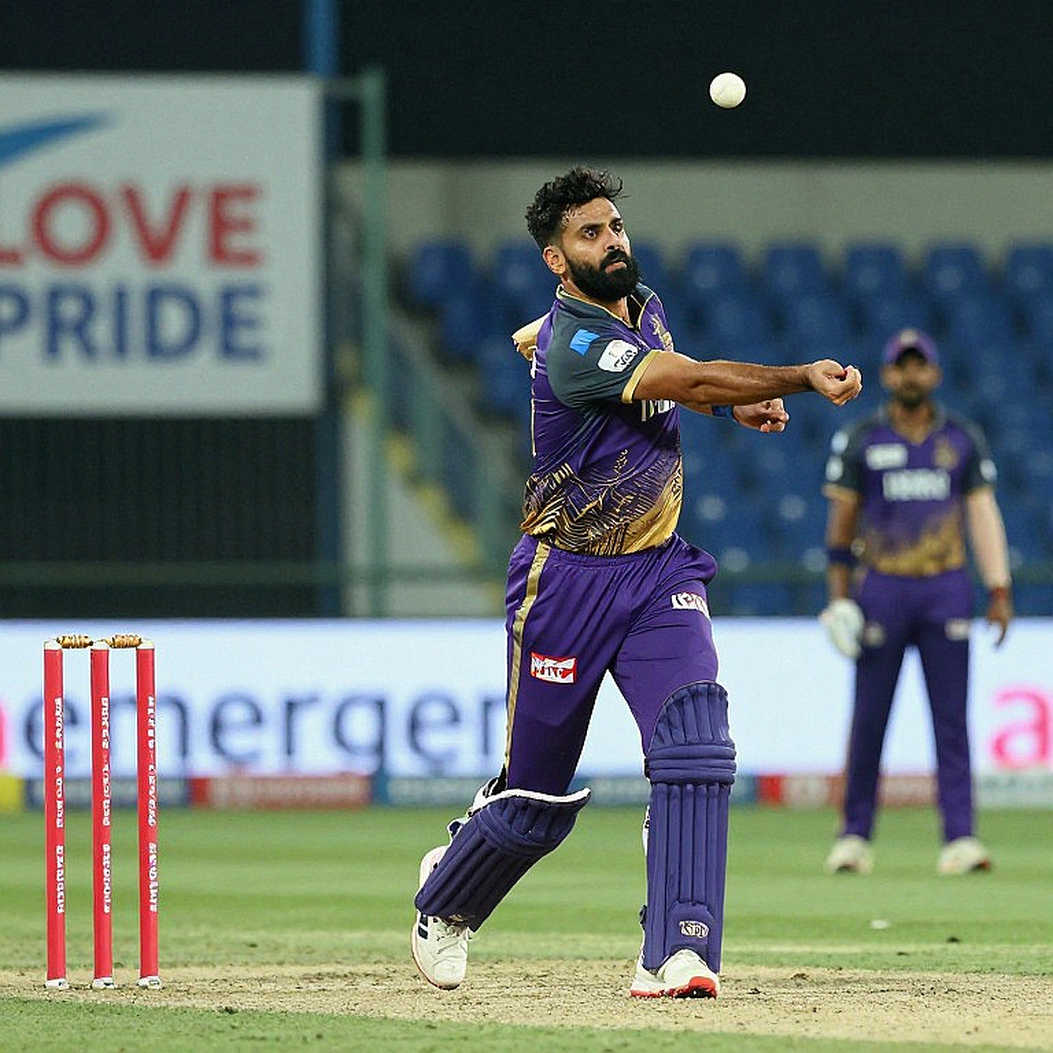
Put those four numbers side by side. Across three completed innings the scoring rate sat between 3.3 and 3.6. Only one innings — Mymensingh's first — stalled at 2.10. When the same team scored at 3.49 on the same surface later in the match, 2.10 stops being a pitch story and becomes a batting story. Surviving 51.3 overs while making only 108 is not what a spicy surface produces; a spicy surface ends an innings quickly. A side that lasts 51 overs and still collapses for 108 was either fighting a slow pitch or making slow-pitch mistakes.
The second sum is the one that surprises. Of Khulna's 288, Mithun made 119 and Sohan 104 — 223 runs from two batters. The rest of the side, extras included, made 65. A 288 built on two hundreds is not evidence of top-order strength; it is evidence of a fragile middle. This is where Meshud's six-for changes colour. In an innings where nine batters share 65 runs, six wickets are a structural consequence, not proof that a bowler controlled the game. The report gives no wicket sequence, so we cannot say whether Meshud removed the centurions or cleaned up what was left. Either way the same two facts stand: Khulna reached 288, and Mymensingh folded for 108.
The third sum belongs to the second innings. Al Amin's 102 came off 185 balls, a strike rate near 55 per hundred balls, against a team rate of about 58. Slightly slower than his side, not dramatically so. That is an anchor's innings, not an aggressor's. And there is a contrast worth holding: Khulna's 288 left 65 runs for everyone after the two centurions, while Mymensingh's 319 left 217 for everyone after Al Amin. The innings we file under defeat was the most evenly shared batting effort of the match.
Soumya's three wickets deserve the same discipline. In a match where Sheikh Parvez Jibon took four, three wickets from Soumya is a share of the workload, not a declaration of a new bowling role. Bangladesh's selectors have spent years hunting a pace-bowling all-rounder who can be a fourth or fifth option in Tests, and every domestic three-for gets read as evidence when it should be read as context. Three wickets in one match is a usefulness signal. A season of them is a role.
One more number that is easy to skip. Mymensingh won the toss and chose to field, and lost by eight wickets. A single match settles nothing about toss value, but it does establish that the toss decided nothing here. A game fixed by a 180-run first-innings lead has no room left for a coin.
Now the part where I have to be careful. This report carries no ages, no averages, no economy rates, no career splits, no pitch report, no weather, no wicket sequence, no partnership detail and no date. What it carries is four innings, photographed once each. So I will not write that Mithun has recovered his form. I will write that he made 119 and was named Player of the Match, and that those two statements agree with each other.
The easiest reading of this scorecard is that two centuries and a shared bowling effort won Khulna the match. The reading that earns its keep is that in a competition whose job is to find Bangladesh's next Test batter, the two leading run-scorers were men who already have national caps. That is not a success metric; it is a pipeline metric. The Mithun and Sohan hundreds tell us how far above domestic bowling international class sits. They do not tell us whether Khulna or Mymensingh are growing anyone who can reach that level.
The second easy reading is that 319 after a follow-on proves character. The arithmetic does not reject it, but it shrinks it. Chasing 108, Mymensingh set Khulna 135; Khulna finished it in 38.3 overs with eight wickets standing, at 3.64 an over. Where a target is cleared with eight wickets in hand, the contest was never restored. Batting long in the fourth innings of a lost match is the easiest thing in first-class cricket, because there is no scoreboard pressure in it; the pressure belongs to the side protecting a lead, not the side chasing.
Al Amin's 102 should be held apart from that. Technically it is the real document here — 185 balls, a follow-on innings, dragging a side from 108 to 319. Some innings are not measured in runs but in the silence after them, and this is one, because his team lost anyway. The report calls him only Al Amin, a name several Bangladeshi cricketers share. Until a full scorecard supplies the full name and the date, I will treat that innings as a technique signal, not a discovery.
This is also where my own method gets tested. In March 2026, three weeks into a lockdown column that had emptied me out, I recorded phone interviews with young players from Gujarat's 2026-17 Ranji-winning side — Chintan Gaja, Arzan Nagwaswalla, Het Patel — and the lesson from those eight thousand words of oral history was that a scorecard is the beginning of a document, not the document itself. The first dig is never the story. Here I have no dig available. So I am keeping Al Amin's 102 inside its limits rather than building it into something larger.
And then the home-ground question. Khulna played at home, and with no pitch report in the source there is no way to separate a stronger Khulna from a Khulna that is stronger only at home. In South Asian domestic cricket that gap is enormous and almost never recorded. Any analysis that skips it gets half the answer right.
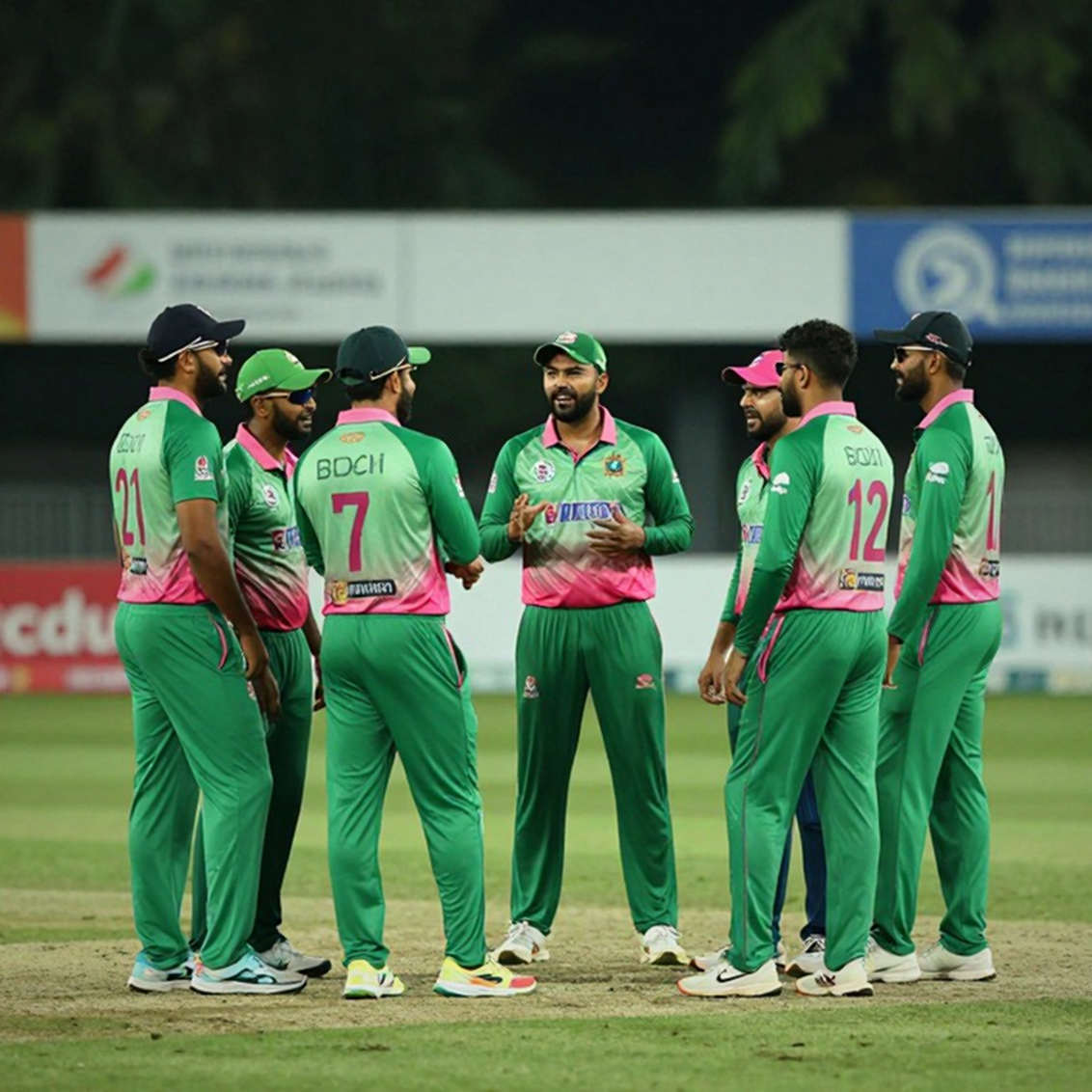
The most honest conclusion in this whole file is that it is one match. Four innings, six names, one date that is not given. Treating it as form evidence is the same mistake made every season — inferring a career from a hundred. The question this match actually raises is not who won. It is what the side that folded for 108 in 51.3 overs does in its next innings, and what kind of innings the bowler who took six wickets walks into next.
The scorecard says Khulna won by eight wickets. It does not say Bangladesh found a Test batter in the process. That answer is not in this document. When Mithun and Sohan next pick up the red ball, when Soumya's bowling spell repeats, we will learn whether this was a league result or the start of a season.