
Spin rules Mirpur as bad light halts play; Bangladesh's lead stalls at 106
बांग्लादेश और वेस्टइंडीज के बीच मिरपुर के शेर-ए-बांग्ला नेशनल क्रिकेट स्टेडियम में खेले जा रहे टेस्ट मैच का तीसरा दिन खराब रोशनी के कारण रोक दिया गया। स्टंप्स के समय बांग्लादेश दूसरी पारी में छह विकेट पर 79 रन बना चुका था और उसकी कुल बढ़त 106 रन थी। यह बढ़त पहली पारी की महज 27 रन की बढ़त और दूसरी पारी में 34/4 की स्थिति से उबरकर बनी है। वेस्टइंडीज की पहली पारी में टैगेनारिन चंद्रपॉल ने 184 गेंदों पर 56 और जस्टिन ग्रीव्स ने 103 गेंदों पर 46 रन बनाए, लेकिन आखिरी तीन विकेटों से सिर्फ चार रन निकले। बांग्लादेश के लिए नईम हसन ने चार विकेट लिए और देश के लिए सबसे तेज 50 टेस्ट विकेट लेने वाले गेंदबाज बने। वेस्टइंडीज के दस में से आठ विकेट स्पिनरों को मिले। मोमिनुल हक सिर पर चोट लगने के बाद कन्कशन सब्स्टिट्यूट के रूप में जाकर अली द्वारा प्रतिस्थापित किए गए। अनुमानित चौथी पारी का लक्ष्य 145 से 180 के बीच रह सकता है, और मौसम की दखल से ड्रॉ की संभावना बनी हुई है।
The third day of the Test match at the Sher-e-Bangla National Cricket Stadium in Mirpur served as a reminder of an old truth that limited-overs cricket has largely buried: in Test cricket, the real currency is not runs but time. The day began with West Indies batting, by mid-afternoon the hosts had wrapped them up in a web of spin, and as evening set in, the umpires were forced to stop play because of poor light. When stumps were drawn, Bangladesh were 79 for 6 in their second innings, with an overall lead of 106 runs.
The number reads comfortably, but it is not the whole story. That figure of 106 is built from two parts: a slender first-innings lead of just 27 runs, and runs salvaged by the lower middle order after the side had slumped to 34 for 4 inside 11 overs in the second innings. When a team whose opener scored a century in the previous innings loses four early wickets in the next, calling it a position of strength is a media convenience, not a data-backed truth.
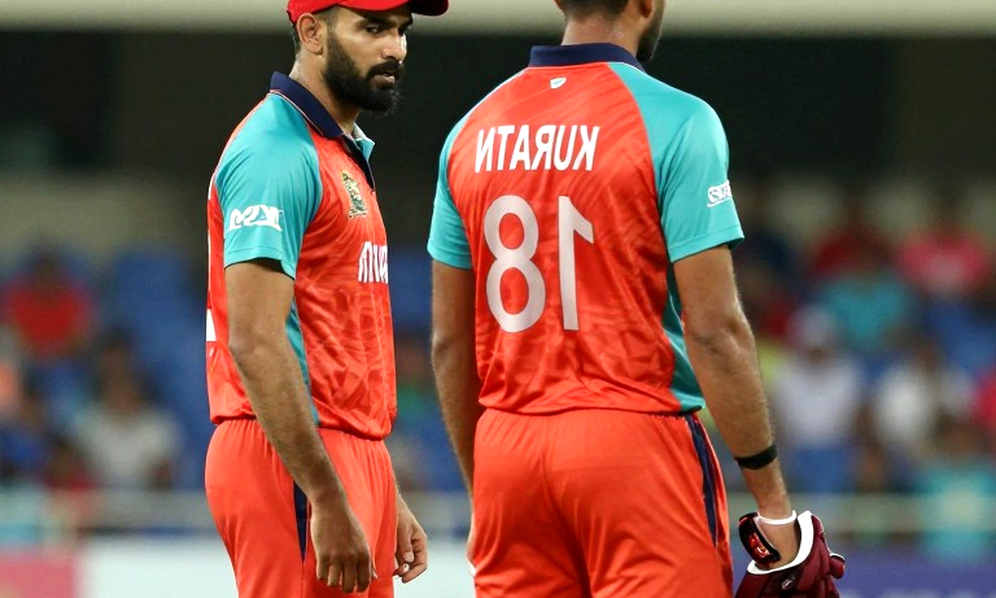
The day's sequence: morning to evening
The morning session belonged to West Indies, at least for the first hour or so. Tagenarine Chanderpaul and Justin Greaves made the home bowlers wait. Chanderpaul scored 56 off 184 balls, including six fours and one six. That is to say, roughly 53.6 percent of his runs came in boundaries, while his strike rate stayed near 30. This is the classic profile of Test opening: leaving the ball, absorbing it, letting the new ball wear off. But on a Mirpur surface where even 250 is being treated as a competitive score, such an innings also becomes a kind of tempo debt.
Greaves made 46 off 103 balls at a strike rate of about 44.7, but his innings contained only two fours. That means boundaries accounted for only about 17 percent of his runs. The clear difference in boundary share between Chanderpaul and Greaves suggests that Greaves was the tempo-setter in that 65-run stand while Chanderpaul held one end. But Greaves also had a life — Mominul Haque dropped him — and was eventually trapped LBW by off spin. The mode of dismissal matters. A left-hander playing across a front pad against off spin and getting trapped is a technical marker, not merely a form issue.
What followed became the decisive turn of the match. West Indies' lower order fell away one after another. The fourth wicket fell at 134, and after that no substantial contribution came. Bishop made 15, Shamar Joseph four, Warrican nought and Seales nought. The last three wickets produced just four runs — four, zero and zero. This was not a dismantling; it was a heap. And when you end up just 27 runs behind the hosts in the first innings, it is worth remembering that the shortfall could easily have been much larger. Greaves' dropped catch has to be factored into that equation.
The Mirpur surface: spin as the decisive force
The clearest reality of this match is that the pitch has been prepared for spin, and it has delivered. Eight of West Indies' ten wickets went to spinners. After lunch, Bangladesh kept the bulk of the overs in the hands of two off-spinners. That was a deliberate strategic decision, born of confidence in how the pitch would behave.
Mirpur's traditional identity is exactly this: low bounce, slow pace, and subcontinental turn that is hard work for batters. On such a surface, the side with the deeper spin attack holds a clear edge. Bangladesh had three frontline spinners in Naeem Hasan, Mehidy Hasan Miraz and Taijul Islam, alongside seam bowling from Hasan Mahmud and Shariful Islam. West Indies, by contrast, looked pace-led — Shamar Joseph and Jayden Seales were the main weapons, while Warrican's spin proved ineffective in this match, returning no wickets at all.
That asymmetry means the entire structure of the match revolves around spin. West Indies' batters looked troubled against spin; the phrase used in the report about being bewildered by Caribbean spin points in that direction. It is worth noting that if the phrase has come through translation, it means the Caribbean batters were confounded by spin bowling, not that Caribbean spinners confounded Bangladesh. The numbers support that reading.
Bangladesh's second innings: from 34/4 to 79/6
The pressure was visible from the start of the second innings. Tanzid Hasan Tamim was out for nought, caught at gully attempting to flick a full-length ball on leg stump. That was not a defensive stroke; it was a risk-laden one, and it came with a fielder placed at gully. Remember, this followed his seven in the first innings. So he fell cheaply in both innings. No verdict on a batter's technique can be delivered on the basis of two innings, but how he was dismissed is itself the concern.
Sadman Islam, having scored a century in the first innings, returned for 13 in the second. Towhid Hridoy, who had made 42 in the first innings, was out for nought in the second — and according to the report it was a pressure shot, a mistimed big hit towards mid-on. Four wickets down for 34 inside 11 overs is no coincidence. It is becoming the habit of a side whose top order cannot bat calmly in difficult conditions.
Yet there was one redeeming aspect in that same innings, and it is what keeps Bangladesh in the game. The lower middle order held firm. The stand that began at the fall of the seventh wicket-level carried the team to a three-figure lead. The report itself concedes that at one point it seemed Bangladesh might not even take a 100-run lead. That admission alone reveals how fragile the foundation of the 106-run lead is.
Naeem Hasan: the shine of a record and its limits
The most substantial individual achievement of this match belongs to Naeem Hasan. He took four wickets in the innings and became the fastest Bangladesh bowler to 50 Test wickets. That is the number that will survive this match, not merely as a single-innings flourish. It is a signal about the shape of a career.
But honesty is required. Three of Naeem's four wickets were tailenders — Joseph, Warrican and Seales. Meaning he closed the innings rather than broke it open. The harder wickets, Chanderpaul and Greaves, were shared from Shariful through to Miraz. This is not a shortcoming in Naeem; it shows that this is the product of a system, not the magic of one man. Bangladesh's spin attack is working collectively in this match — four for Naeem, two each for Miraz and Taijul, one each for Hasan Mahmud and Shariful.
A caveat is needed about Naeem's record. Achievements like fastest to 50 Test wickets for Bangladesh are often built on the heavy workloads spinners receive in home conditions. His record in Mirpur is real, but deciding whether he genuinely deserves the frontline spinner tag will require overseas data. Until then, the claim is incomplete.
West Indies' reality: closer than the framing suggests
West Indies are being presented as a worse side than they actually are. Two of the three biggest individual scores in this match belong to West Indies batters — Chanderpaul's 56 and Greaves' 46. The first-innings gap was only 27 runs. That is not the signature of a one-sided defeat.
The real problem is in the lower order. Any Test team expects its numbers five through eight to add 60 to 80 runs across 8-10 wickets. Here, the last three wickets produced four runs. The direct consequence is that the work done by the top order was left unfinished. This is not a new ailment; it is the long-standing problem of a team that has been weak against spin in Asian conditions.
From a cricketing standpoint it is also worth noting that Chanderpaul's innings, while holding one end, at times built pressure on his partners. Fifty-six off 184 balls — on a surface where the tail was falling like cards — does not help much if it does not convert into a major partnership. This observation comes with the caveat that we do not have West Indies' innings total or the scoring rates of the other batters. The full picture will remain incomplete without the scorecard.
Mominul's injury and the concussion substitute debate
The most sensitive human moment of the day concerns Mominul Haque. He was struck on the head while fielding and was replaced by Jaker Ali as a concussion substitute. This is a procedural step, approved by the match referee, on the condition that the replacement is like-for-like.
Two things are worth noting here. First, the injury occurred while fielding, not while batting. That means head-injury protocols are not only for the batter at the crease; they apply equally to the fielder. Second, Mominul is a specialist batter and Jaker Ali is a wicketkeeper-batter. The like-for-like principle may be satisfied — both are batters — but the team gains an additional keeping option. That is precisely the kind of marginal gain the concussion substitute rule tries to constrain.
We do not have the match referee's reasoning in this case. So no conclusion can be drawn about whether the rule was misused. What is clear is that Mominul appears almost certain to be unavailable for the rest of this Test under return-to-play protocols. And that is an additional blow to a batting line-up that has already proved fragile.
Weather: rain, light and the draw
The day's two weather interruptions may prove as decisive to the direction of this match as any wicket. Rain forced an early tea. Then poor light stopped play. In Test cricket, both mean something entirely different from limited-overs cricket. There is no Duckworth-Lewis-Stern target revision here. What is lost is time — precious overs, which inevitably push up the probability of a draw.
On its face, the umpires' call on light is neutral, but in this match state its effect is not. Bangladesh need to bowl West Indies out; the less time they get, the harder the task. Every stoppage cuts directly into the hosts' overs budget. That is both the beauty and the limit of Test cricket.
What will the fourth-innings target be?
Now the most practical question. Bangladesh have four wickets in hand and a lead of 106. If the last four wickets add 40 to 70 runs — a reasonable estimate — West Indies will face a target between 145 and 180. On a fourth and fifth day Mirpur surface, against three spinners, that target is competitive but not safe.
This is where the figure of 106 is deceptive. If the target is around 145, one big partnership can bring West Indies back into the game. If Bangladesh get past 180, the hosts will be clear favourites. The distance between the two scenarios is only 35 runs, but the effect on the result will be enormous. So Bangladesh lead by 106 describes the state of the match, not control of it.
The structure of both teams: strengths and cracks
Bangladesh's strength in this match is obvious — a bowling attack that fits the conditions. Three spinners, two seamers, and on a home surface the ratio that maximises the chance of winning. But the same attack would be imbalanced on a seaming pitch. That is to say, this lead is built more on selection suited to conditions than on outright team quality. Understanding that distinction matters, because it determines how much a home advantage can be converted into World Test Championship points.
Bangladesh's real ceiling is set by their batting. A side that goes 34 for 4 after its opener scored a century in the previous innings has a problem of structure, not merely of form. The stability of the opening pair is in question, the number three is inconsistent, and shot selection deteriorates the moment pressure arrives. Hridoy's attempt at a big hit towards mid-on was a product of that pressure.
West Indies have a debutant all-rounder, Bishop, in the XI, which signals a thin spin pool. Warrican was ineffective in this match, while Joseph and Seales had to carry the pace workload. That structure tends to struggle on Asian tours.
Three scenarios: what might happen on days four and five
First, the base case. Play starts on time, Bangladesh's tail adds 40 to 70, West Indies face 145 to 180, and the hosts' three spinners prove decisive in the fourth innings. This is the most likely path.
Second, the risky case. Bangladesh's last four wickets fall cheaply, the target stays below 145, and West Indies find one substantial partnership. On such a surface, chasing 140 to 150 is not impossible, especially with a patient batter like Chanderpaul at the top.
Third, the weather case. Rain or poor light returns on day four or five, overs are lost, and the match drifts towards a draw. In Test cricket that option is always alive, and in this match rain and light have both intervened on the same day. Treating that as coincidence would be unwise.
Where the risks lie
The biggest risk is that a 106-run lead turns into a losing position. Four wickets remain, the team has already lost four for 34 in this match, and the projected target is only between 145 and 180. Building a story of a commanding position would be premature.
The second risk is the weather, already realised. The third is the spin workload — three spinners, two innings, and a turning surface. If the series continues immediately, the finger spinners will carry a heavy overs burden.
The fourth is the debate over the concussion substitute, currently quiet, but if Jaker Ali plays a significant role in the fourth innings, it could return to the headlines.
What to watch next
First, the final total of Bangladesh's second innings. That will decide which way the match tilts. Second, the pitch on the fourth morning — if both bounce and spin increase, West Indies' task becomes much harder. Third, the Mirpur weather. Fourth, Mominul's return-to-play status, which could reshape the top order for the next Test. And fifth, Naeem Hasan's overseas record — because that is where a real identity is forged.
For now, spin rules in Mirpur, the hosts lead by 106, and two days remain. But this match has not yet proved that Bangladesh can convert this into a win — it has only proved that they are not yet beaten.