
होमField HockeyOne Point, Two Goals, At Least 24 Conceded: Bangladesh's Hockey Story Is Written in Structure, Not Just Scorelines
One Point, Two Goals, At Least 24 Conceded: Bangladesh's Hockey Story Is Written in Structure, Not Just Scorelines
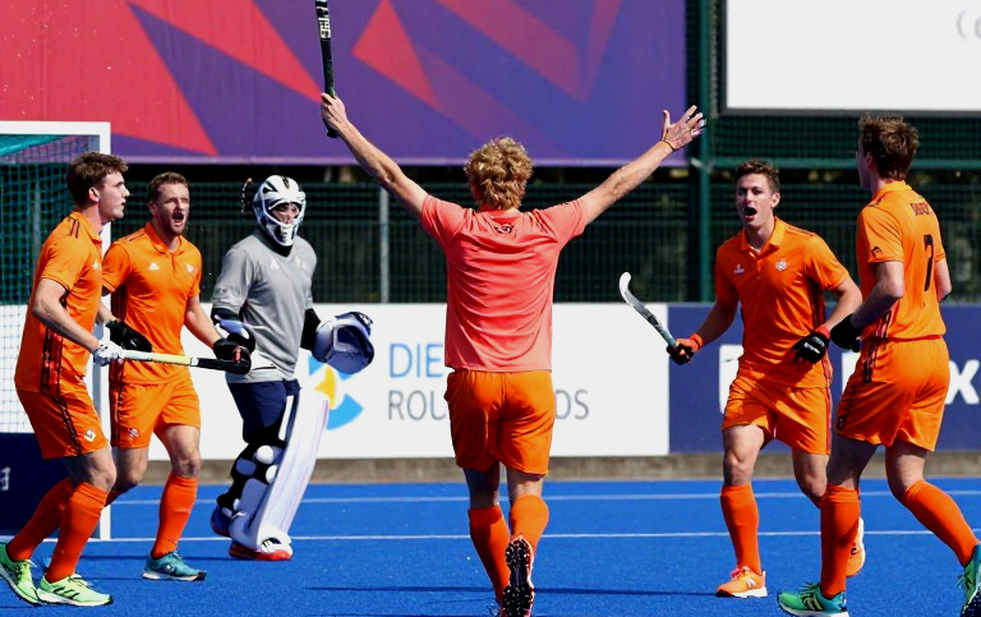
बांग्लादेश की पुरुष हॉकी टीम ने एशियाई चैंपियंस ट्रॉफ़ी में पाँच मैचों में सिर्फ़ एक अंक लिया — दो गोल किए, कम से कम 24 खाए। आख़िरी ग्रुप मैच में चीन के साथ 1-1 का ड्रॉ कप्तान आशरफुल इस्लाम के तीसरे क्वार्टर के पेनल्टी स्ट्रोक से आया। यह नतीजा टैक्टिकल प्रगति का प्रमाण नहीं है, क्योंकि चीन पहले ही क्वालीफ़ाई कर चुका था और उसने रोटेशन किया। पूरे अभियान में ओपन प्ले से एक भी गोल दर्ज नहीं; दोनों गोल डेड-बॉल से। भारत से 13-0 की हार ढाँचे का मापदंड है, बुरा दिन नहीं। असली कमी आक्रामक रचना में है, और बिना पज़ेशन, सर्कल एंट्री, शॉट व कॉर्नर डेटा के हर तकनीकी निष्कर्ष अनुमान ही रहेगा।
Bangladesh's men's hockey team leaves the Asian Champions Trophy with a record of five matches, one point, two goals scored and at least 24 conceded — four defeats and a draw. The 1-1 stalemate against China in the final group game looks respectable on paper, but it is not evidence of progress. It is the product of a match in which one side had already secured its passage and the other had nothing left to lose.
The quarter-by-quarter account is the most revealing part. China led in the first quarter, the second was goalless, captain Ashraful Islam equalised from a penalty stroke in the third, and the fourth produced nothing either. The pattern points to a team whose most effective window is the post-halftime reset: it adjusts structurally at the break, starts slowly and fades late. In a four-quarter format, a thin squad that fades in the fourth quarter is systematically vulnerable. That said, this is a single match without comparative quarter data, so the conclusion carries low-to-medium confidence.
The clearest technical signal lies in how the goals were scored. Both of Bangladesh's goals came from dead-ball situations — one in the 6-1 defeat to Malaysia, one from a penalty stroke against China. There is no open-play goal anywhere in the dataset. The distinction matters and is routinely missed: a penalty stroke is awarded, not manufactured. Unlike a penalty corner, it is not the output of an attacking structure. Bangladesh's scoring model is therefore not merely set-piece dependent; it is stroke-dependent, which is even less sustainable. That is the signature of a side that cannot generate sustained circle penetration.
The 13-0 defeat to India must not be dismissed as a bad day. A thirteen-goal margin is a measurement, not an incident. It describes a total breakdown of the defensive block under sustained pressure: no effective first press, no outlet, and almost certainly a collapse in the second and third quarters once the game was gone. Margins like that appear when one team cannot hold the ball at all and the other converts every turnover into a circle entry. The 6-1 loss to Malaysia belongs to the same category, merely at lower intensity.
What can be inferred about the defensive model — and inferred, not measured — is a deep, compact block with a high ratio of players behind the ball, conceding large volumes of circle entries and penalty corners. The report provides no possession share, no shot count, no circle entries, no corners won or conceded. That cuts both ways: praise for the defensive shape would rest on inference, and so would criticism. The only hard fact is that Bangladesh kept China scoreless in the second and fourth quarters — a sign of shape discipline, not of attacking construction.
In tactical terms, Bangladesh belongs to no modern school. The European model of structured possession and high press, the Australian model of high-intensity physical transition and India's individual-skill and speed model all presuppose an ability to sustain possession chains. A profile of one point, two goals and at least 24 conceded is a survival model, not a system. And a survival model only works against opponents who play at low tempo or rotate — plausibly what China did in a dead rubber.
It is worth recording that inference explicitly: China, already secure in the standings, had every incentive to manage minutes and protect key players before a semi-final. A controlled, low-risk game is natural in that situation. Bangladesh, by contrast, had no pressure at all. A 1-1 from that combination is game-state, not tactical advancement. Presenting it as progress would be result inflation — the single biggest risk flag in this analysis.
On fitness and squad depth, conceding thirteen to India implies a physical collapse. Four quarters every other day, a thin squad and limited rotation make a fourth-quarter drop-off expected. The opposite reading is also available: the goalless fourth quarter against China may reflect China easing off rather than Bangladesh holding firm. The available data cannot separate the two explanations.
Data availability must be stated plainly. This analysis rests on limited and internally contradictory information. There is a five-match round robin with four defeats and a draw, two goals scored and at least 24 conceded. But not a single figure for possession, circle entries, shots or penalty corners. Technical claims therefore become inference by necessity. On the FIH World Ranking, Bangladesh men sit outside the top 25, generally reported in the 30-40 band, while China occupy roughly the 20-30 band on an upward 2026-2026 trajectory. Both figures are pending verification, and rankings are themselves distorted by participation frequency, which systematically underrates low-event nations.
Two further points must be recorded because omitting them would be dishonest to the reader. First, the FIH Champions Trophy and the AHF Asian Champions Trophy are different competitions. The global FIH event was discontinued after the 2026 editions (men's Breda, women's Changzhou). Any post-2026 Asian reference to a "Champions Trophy" must mean the AHF Asian Champions Trophy — a continental six-to-seven-team round robin of far lower competitive and commercial tier. The text uses both names interchangeably. Second, the host city is given as Jalandhar. Jalandhar is a genuine Indian hockey hub, home to the Surjit Hockey Stadium, but recent men's ACT editions were staged in Dhaka (2026), Chennai (2026) and Hulunbuir, China (2026). The edition and year cannot be verified from the text and must be treated as data pending verification.
Third, and most seriously, the report contradicts itself. One passage records a 1-0 defeat to Japan; another records a five-goal defeat to Japan — within a stated single five-match round robin. A single round robin cannot contain two matches against the same opponent. The most probable explanation is that results from two different competitions (most plausibly the Asian Games and the Asian Champions Trophy) have been stitched together, or that one figure is a transcription or translation error. Until that is resolved, conclusions that depend on exact margins carry downgraded confidence. The signals that survive the inconsistency are the strongest ones: one point from five matches, two goals scored, at least 24 conceded, and an only goal in the match under review from a penalty stroke.
The overall reading is that Bangladesh's problem is creative, not defensive. A deep block and a disciplined shape can hold for a while — the second and fourth quarters against China are evidence of that. But when a team has no open-play goal, when its only route to the scoresheet is an awarded penalty stroke, it is planning to survive matches rather than win them. High-press, high-tempo opponents such as India and Malaysia expose that model with margins like 13-0 and 6-1.
The way forward is clear if it is set honestly. First, accept that the 1-1 draw is not proof of progress. Second, connect defensive discipline to an attacking structure: build the capacity to hold possession, the habit of generating circle entries and a plan to win penalty corners, since the current profile contains not a single corner goal. Third, address squad depth and fitness loading so the fourth quarter can be survived. Fourth, and perhaps most important, impose statistical discipline. Until possession, circle entries, shots and corners are recorded, every technical conclusion remains an estimate — and a plan built on estimates will break again in the next 13-0.
संबंधित खिलाड़ी
लोकप्रिय/पसंदीदा पुस्तकें
Bangladesh's One Point, Two Goals and 24 Conceded: The Real Price of a Survival Model in Asian Hockey2026-11-03
'First Real Test' Is Not Malaysia: Auditing a Preview That Its Own Margins Contradict2026-11-02
From Astroturf to the Drag Flick: The Tactical Revolution of Modern Hockey and India's Renaissance2026-11-01
Asian Champions Trophy: India Beat China 5-2 as Harmanpreet and Sukhjeet Shine2026-10-31
Five Matches, Seven Days, Two Back-to-Back Pairs: Bangladesh's Real Test Is the Calendar2026-10-24
Five Matches in Seven Days: Bangladesh’s Real Test Is Bench Depth, Not the Camp2026-10-24
One Point, Two Goals, At Least 24 Conceded: Bangladesh's Hockey Story Is Written in Structure, Not Just Scorelines2026-11-03
अनुशंसित
The 20th Trinity–Thomian Hockey Encounter: The Scorebook Colombo's Astro Turf Never Kept2026-10-25
Eleven on the Sheet, Nine on the Replay: Who Audits Hockey's Penalty Corner Register?2026-10-28
Sultan of Johor Cup final: nerve decides the fifth attempt as Malaysia beat Pakistan 4-3 in the shootout2026-10-25
The Jalandhar Scoreboard Said 13-0; the Stands Said Something Else2026-10-30
One Point, Two Goals, At Least 24 Conceded: Bangladesh's Hockey Story Is Written in Structure, Not Just Scorelines2026-11-03
Pride and tears in Jalandhar: a father's first live match, and a 13-0 scoreboard2026-10-29
Asian Champions Trophy: Five Matches in Seven Days and a Thin Squad — Bench Depth Will Be Bangladesh's Real Test2026-11-01
अनुशंसित
Bangladesh's One Point, Two Goals and 24 Conceded: The Real Price of a Survival Model in Asian Hockey2026-11-03
Bangladesh's Asian Champions Trophy Mission: Seven Days, Five Matches, and a Calendar That Tests the Bench More Than the Tactics2026-10-24
Asian Champions Trophy: India Beat China 5-2 as Harmanpreet and Sukhjeet Shine2026-10-31
The Jalandhar Scoreboard Said 13-0; the Stands Said Something Else2026-10-30
Five Matches in Seven Days: Bangladesh's Real Test at the Asian Champions Trophy Is Bench Depth, Not Tactics2026-10-24
'First Real Test' Is Not Malaysia: Auditing a Preview That Its Own Margins Contradict2026-11-02
The 20th Trinity–Thomian Hockey Encounter: A Match Played on Astro Turf, and the Scorecard Nobody Published2026-10-25